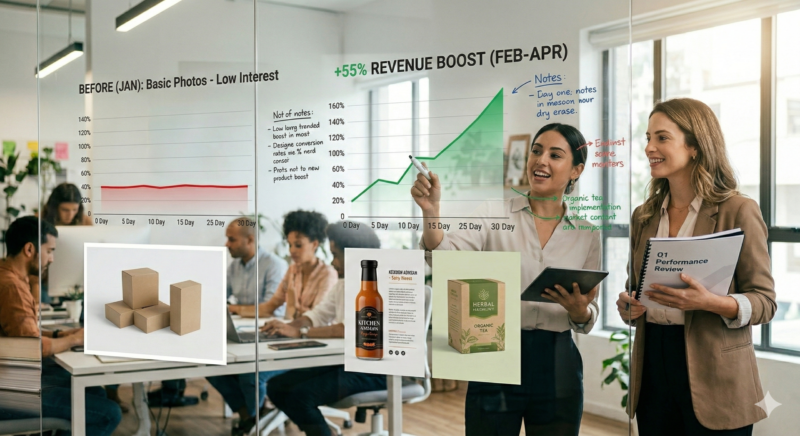
Mockups aren't just "pretty pictures." They're strategic sales tools.
By presenting a product in a realistic context, people can picture it being used in practice, which increases trust, desire, and - most importantly - conversion.
Why Do Mockups Work So Well?
When a product is shown in a real-world setting, the viewer's brain makes an instant connection:
- "I can actually use this"
- "This would look good with me"
- "This looks professional"
That sense of recognition reduces doubts and speeds up the buying decision.
Highlight
Products presented with realistic mockups can significantly increase conversion rates compared to plain images.
Mental Triggers Activated
Mockups activate several important psychological triggers:
- Visualization
- Trust
- Desire
- Belonging
Without these elements, the product becomes just another generic item.
Image Suggestions (for the article)
- lifestyle t-shirt mockup with a person
- realistic product-on-table mockup
- packaging mockup held in a hand
- lifestyle digital device mockup
Direct Benefits of Mockups
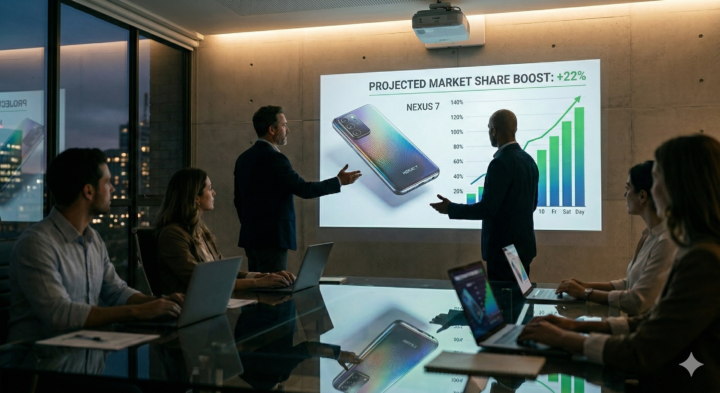
Increases perceived value
Improves engagement
Increases conversion
Reduces customer doubts
Makes the product look more professional
Tip
Use mockups with people whenever possible - this further strengthens the emotional connection.
How Mockups Influence the Buying Decision
Seeing the product used in a real environment lets the user picture using it in everyday life.
This removes one of the biggest barriers to online shopping: lack of context.
Without a mockup:
- Isolated product
- Not very appealing
- Hard to picture in use
With a mockup:
- Contextualized product
- More desirable
- Easy to visualize
Fun Fact
The human brain processes images much faster than text - that's why mockups have such an impact.
Why Mockups Increase Perceived Value
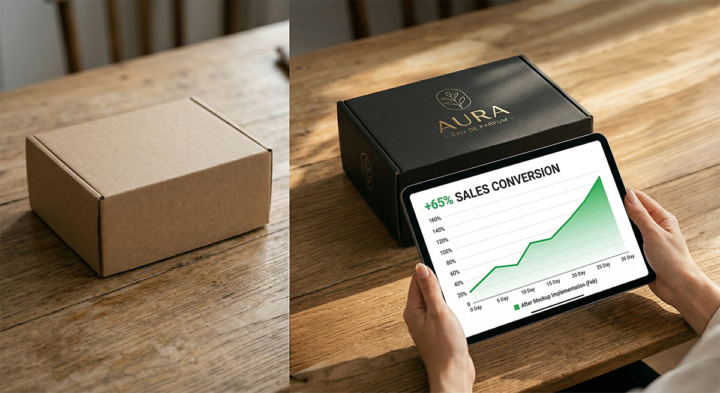
The same product can look:
- cheap -> on a plain white background
- premium -> in a well-made mockup
This happens because context completely changes perception.
Highlight
It's not just the product that sells - it's how it's presented.
Types of Mockups That Convert Best
1. Lifestyle (with people)
Show real-world use and create an emotional connection.
2. Realistic environment
Simulate everyday situations.
3. Close-up / details
Highlight quality and finish.
4. Before/after comparisons
Increase the perception of transformation.
Common Mistakes When Using Mockups
- Using overly generic mockups
- Low quality or low resolution
- Inconsistent lighting
- Too many distracting elements
- Not matching the target audience
Strategies to Maximize Results
- Use multiple angles
- Combine a mockup with a clean product image
- Test different versions (A/B)
- Keep visual consistency in your store
- Always prioritize realism
Advanced Tip
Mockups with natural lighting and realistic shadows perform better.
Ideal Structure for a Product Page
- Main mockup (impact)
- Mockup with context
- Close-up of details
- Mockup in real use
- Clean product image
Quote
"Design sells when it's seen in the right context."
Conclusion
Mockups aren't a small detail - they're one of the main conversion factors.
If you want to sell more, you need to show your product the way it would actually be used in real life.